




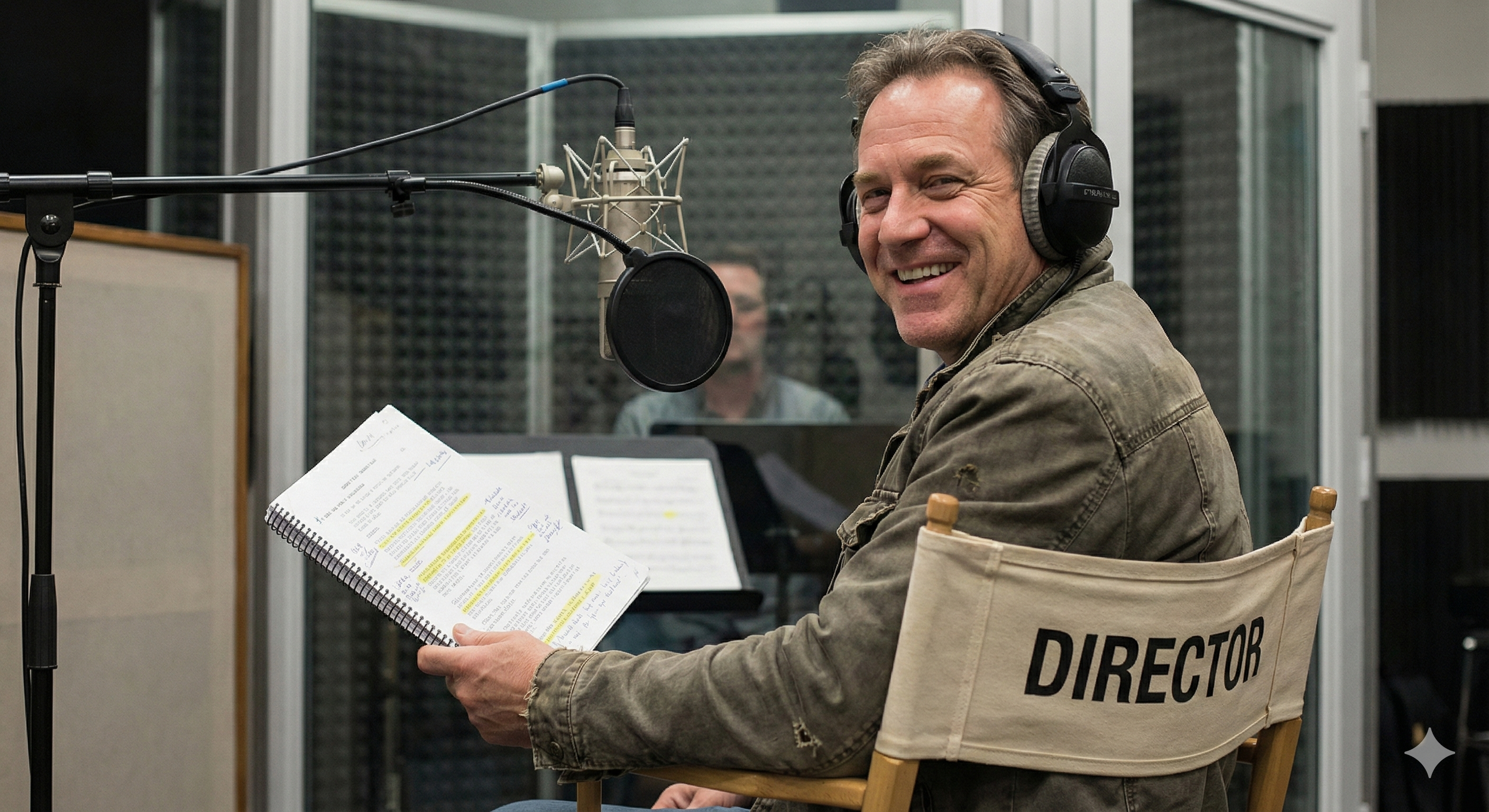
You’ve written the perfect script. You’ve selected a voice talent from Voice To Me with the exact right tone. But when the audio file finally lands in your inbox, it feels… not quite right. It sounds good, but it lacks that specific “spark” you heard in your head.
Sound familiar?
Directing a voice actor can feel intimidating if you aren’t an experienced producer. Many clients get stuck trying to explain technical details, like “speak a bit faster here” or “go up in pitch there.” But the secret to a great recording is rarely about technique—it’s about communication and context.
Here are 5 tips to help you get exactly the result you want, without needing to be an expert in sound direction.
1. Context is King The absolute most important thing you can give a voice actor isn’t instructions about tempo, but information about where the voice will be heard. A voice behaves completely differently depending on the platform.
- Instagram Story: Often requires high energy, a fast pace, and a “straight to the point” attitude to stop scrolling thumbs.
- E-learning/Training: Requires calm, clarity, and pausing so the listener has time to absorb the information.
- Brand Film: Perhaps it should be poetic, inspiring, and close to the microphone?
Tip: Always write a line at the top of the script: “This will be used on [Platform] and the target audience is [Target Audience].”
2. Think in Emotions, Not Sound Waves Instead of saying “speak lighter,” try to describe the feeling or the relationship to the listener. This is what professional voice actors are best at interpreting. Use adjectives and metaphors:
- “Imagine you are telling a secret to a close friend.”
- “You are an authoritative news anchor delivering important facts.”
- “Pretend you are trying to pep talk a football team at halftime.”
When you set a “role” for the voice, the tempo and pitch often fall into place naturally.
3. Highlight the Essentials (Emphasis) Language can be tricky. A sentence can change meaning entirely depending on which word you emphasize. Take the sentence: “I didn’t say we should change suppliers.”
- “I didn’t say…” (Someone else said it).
- “I didn’t say we should change…” (Maybe we were just going to evaluate them).
Tip: Go through your script and bold or <u>underline</u> the words that carry the core message. This helps the reader understand the heart of the text immediately.
4. Reference Listening (Borrow from Others) It’s perfectly okay to steal ideas. Have you heard a radio commercial or seen a YouTube video where the voice has the exact attitude you’re looking for? Send a link!
Saying “We want the same feeling as in Volvo’s latest ad, but a bit happier” is a fantastic shortcut. It gives us and the voice talent a shared goal right from the start. You can also listen to the voice’s previous demos on our website and say: “I liked how you sounded in demo no. 2, go with that style.”
5. Trust the Voice Actor (and Us!) Remember that the voices in our archive are pros. They read scripts every day. Sometimes an instruction can be as simple as: “Here is the text, feel free to interpret it however you think fits best for a tech startup.”
And if you still feel unsure? We are here. At Voice To Me, we are used to acting as the link between your vision and the voice’s performance. We can help you formulate the direction or even be present during the recording to ensure it’s right on the first take.
In summary: Be clear about the context, speak about emotions rather than technique, and don’t be afraid to show examples. That makes the result sweet music to your ears.
More from our blog: